


Prairie lizard at Lathrop Lake State Park
Living with Wildlife
Wildlife And Animal Possession in Colorado
Colorado Parks and Wildlife’s (CPW) stance on owning wildlife is informed by conservation, with the goal of maintaining Colorado’s unique ecosystem and protecting native animals.
Colorado wildlife law generally prohibits the importation, live possession, sale, barter, trade, or purchase of any species of wildlife native to Colorado (33-6-109, 33-6-113, 33-6-114 C.R.S.). In addition, these same laws restrict or prohibit the importation and possession of exotic (non-native) wildlife (33-6-109(4), C.R.S.); and noncommercial (pet) possession of regulated mammals has been prohibited by CPW regulations since 1983.
In Colorado, you can NOT remove an animal from the wild with the following exceptions with licensing. CPW offers the following licensing that allow wild-caught wildlife to be held in live possession:
- Bait Dealers: See Chapter W-01 or https://ag.colorado.gov/animal-health/aquaculture
- Falconry: See Chapter W-06
- Herpetofauna: See Chapter W-07
- Commercial Wildlife Parks/Zoological Parks / Wildlife Sanctuaries: See Chapter W-11
- Scientific Collection: See Chapter W-13
- Wildlife Rehabilitation: See Chapter W-14
New Wildlife Trafficking Law
On July 1, 2026, a new law that targets wildlife trafficking takes effect in Colorado. This law implements Senate Bill 25-168, making it illegal to knowingly possess, sell, transport, import or export illegally obtained wildlife for monetary gain. This applies whether the person knew or should have known the wildlife was obtained illegally. The law covers not only native Colorado wildlife but also wildlife species listed under the federal Endangered Species Act (ESA) and Appendix I of the Convention on International Trade in Endangered Species of Wild Fauna and Flora (CITES).
The law substantially enhances the penalties under existing statutes for wildlife trafficking crimes. It also requires Colorado Parks and Wildlife to actively investigate commonly trafficked wildlife to improve targeted law enforcement efforts. Additionally, the law grants the Colorado Parks and Wildlife Commission the authority to suspend wildlife licenses held by those convicted of a wildlife trafficking violation. Live or dead wildlife, including parts and derivatives of an animal, that were legally possessed are not affected by this new law.
The species covered by CITES are listed in three appendices, according to the degree of protection they need.
- Appendix I includes species threatened with extinction. Trade in specimens of these species is permitted only in exceptional circumstances.
- Appendix II includes species not necessarily threatened with extinction, but for which trade must be controlled to avoid utilization incompatible with their survival.
Annually, the international wildlife trade is estimated to be worth billions of dollars, involving hundreds of millions of plant and animal specimens. Products from this trade include food items, exotic leather goods, wooden musical instruments, timber, medicines, and novelty items for tourists. Levels of exploitation of some animal and plant species are high. The trade in these species, together with other factors such as habitat loss, can heavily deplete populations and even bring some species close to extinction.
The Convention on International Trade in Endangered Species of Wild Fauna and Flora (CITES) is an international agreement between governments. CITES aims to ensure that international trade in wild animals and plants is legal, sustainable, traceable, and does not threaten the survival of species in the wild.
CITES regulates international trade in wild animal and plant specimens based on a system of permits and certificates. It covers export, re-export, import, and landing from the high seas of live and dead animals, plants, and their parts and derivatives, including any processed products. Many species in the trade are not endangered, but this agreement to ensure the trade's sustainability will safeguard these resources into the future.
Resident Herpetofauna Collection and Possession License


Ready to get the license?
You can get the license on CPW Shop (under Go Hunting & Fishing, Resident Herpetofauna)
Purchase a license
CPW Herpetofauna Reporting
Already licensed and need to report? Or need to submit a legacy report?
Submit a report
More About the License
Learn more about license requirements and species you can collect.
Learn moreAnimals You Can Own in Colorado
Some animals sold commercially are considered domestic species or exotic wildlife. CPW has created several categories of animals and wildlife that you may own, import, propagate, or sell without a CPW license. These include:
- Herpetofauna Species: Chapter W-07, Appendix A or Appendix B
- Domestic Animals: Chapter W-11, #1103, A – Domestic Species List
- Unregulated Wildlife*: Chapter W-11, #1103, B – Unregulated Wildlife List (*Note: Unregulated Wildlife means: a CPW license is not required for possession. All other regulations still apply. Importation requirements must be met, no release.)
For the purposes of CPW regulations, “Tropic/Subtropic Region” is defined as the region between 26.0 degrees north latitude and 26.0 degrees south latitude.
Regulated Wildlife
Any species of wildlife that is not specifically listed in Chapter W-11 as Domestic or Unregulated or in Chapter W-07 as Appendix A or Appendix B, the species is regulated wildlife and a CPW license is required. CPW will not issue a license for private possession (eg pet) of regulated wildlife. For commercial purposes, CPW offers licensing for Zoological Parks, Wildlife Sanctuaries, and Commercial Wildlife Parks.
Never Release Live Animals
Live animals may never be released into the wild. Introducing live animals into the Colorado ecosystem can have devastating consequences. Exception: Release of privately owned game birds (limited to Gambel’s, Scaled or Bobwhite Quail, Ring-neck pheasant, Grey Partridge, Chukar, or Mallard Duck. Restrictions apply – see CPW Regulation Chapter W-00, #009.
List of Animals
No License Required
You do not need a license from CPW to own any of the animals on the domestic list or unregulated species list. Please contact your city/county to see if the animal is allowed where you live. These animals must comply with regulations of the state agriculture and health departments that deal with public and animal health.
From CPW Regulation Chapter W-11, #1103, A – Domestic List:
- Domesticated races of chickens (Gallus)
- Domesticated races of turkey (Meleagria gallopavo) distinguished morphologically from wild birds
- Domesticated races of ducks and geese (Anatidae) distinguishable morphologically from wild birds
- Domesticated races of pigeons) and feral pigeons (Columba domestica and Columba livia)
- Domesticated races of guinea fowl (Numida meleagris)
- Domesticated races of peafowl (Pavo cristatus)
- Ostrich (Struthio spp.)
- Rhea (Rhea spp.)
- Emu (Dromiceius spp.)
From CPW Regulation Chapter W-11, #1103, B – Unregulated Wildlife:
- All Psitticine birds excluding the Monk Parakeet (aka Quaker Parrot)
- All birds in the Order Passeriformes that is native to the tropic/subtropic only.
- If any of the native range extends outside the tropic/subtropic, the species is regulated wildlife and requires a CPW license for possession.
- Members of the subfamily Phasianinae not native to North America except chukar partridge, grey partridge, red-legged partridge and ring-necked pheasant.
CPW Regulation Chapter W-00, #008 has a list of prohibited species.
- Monk Parakeet (aka Quaker Parrot) is a prohibited species and not allowed in Colorado.
Species List
This is a list of species that have been researched to determine if it is Domestic, Unregulated, Regulated, or Prohibited.
Bird List
Download
Contact Us
If you are inquiring about a specific species and you do not see it on the list, please email your inquiry with common and scientific name to [email protected].
No License Required
You do not need a license from CPW to own any of the animals on the domestic list or unregulated species list. Please contact your city/county to see if the animal is allowed where you live. These animals must comply with regulations of the state agriculture and health departments that deal with public and animal health.
From CPW Regulation Chapter W-11, #1103, B:
- All tropical and subtropical fishes that are native to the tropic/subtropic only.
- If any of the native range extends outside the tropic/subtropic, the species is regulated wildlife and requires a CPW license for possession
- Common goldfish (Carassius auratus)
- Koi
- All marine animals (vertebrates and invertebrates) except for anadromous and catadromous species
Species List
This is a list of species that have been researched to determine if it is Domestic, Unregulated, Regulated, or Prohibited.
Fish & Marine Animals List
Download
Contact Us
If you are inquiring about a specific species and you do not see it on the list, please email your inquiry with common and scientific name to [email protected].
No License Required
You do not need a license from CPW to own any of the animals on the domestic list or unregulated species list. Please contact your city/county to see if the animal is allowed where you live. These animals must comply with regulations of the state agriculture and health departments that deal with public and animal health.
From CPW Regulation Chapter W-11, #1103, A:
- Domestic dog (Canis familiaris) including hybrids with wild canids
- Domestic cat (Felis catus) including hybrids with wild felines
- Domestic horse (Equus caballus) including hybrids with Equus assinus
- Domestic ass, burro, and donkey (Equus assinus)
- Domestic cattle (Bos taurus and Bos indicus)
- Domestic sheep (Ovis aries) (restrictions – see below)
- Domestic goat (Capra hircus) (restrictions – see below)
- Domestic swine (Sus scrofa domestica)
- Domesticated races of hamsters (Mesocricetus spp.)
- Domesticated races of mink (Mustela vison)
- Domesticated races of guinea pigs (Cavia porcellus)
- Domesticated races of gerbils (Meriones unguiculatus)
- Domesticated races of chinchillas (Chinchilla laniger)
- Domesticated races of rats (Rattus norvegicus and Rattus)
- Domesticated races of mice (Mus musculus)
- Domesticated races of European rabbit (Oryctolagus cuniculus)
- Domesticated races of European ferret (Mustela putorius)
- Domestic Bison (Bison), meaning privately owned bison, bison legally reduced to - captivity, bison that have escaped captivity, and bison owned by or lawfully reduced to captivity by an Indian tribe, including hybrids with domestic cattle.
- Asian Water Buffalo (Bubalus bubalis)
- Llama (Lama glama)
- Alpaca (Lama pacos)
- Reindeer (Rangifer tarandus)
- Yak (Bos grunniens)
- Camels (Camelus bactrianus and Camelus dromedarius)
From CPW Regulation Chapter W-11, #1103, B:
- African pygmy hedgehog (Atelerix albiventris, Erinaceus albiventris)
- Sugar Gliders (Petaurus breviceps)
- Short-tailed Possum (Monodelphis domestica)
- Dama (Tammar)
- Wallaby (Macropus eugenii)
- Swamp Wallaby (Wallabia bicolor)
- Bennet (Red-necked) Wallaby (Macropus rufogriseus)
- Red Kangaroo (Macropus rufus)
- Wallaroo (Macropus robustus)
- Zebras and Zebra hybrid
CPW Regulation Chapter W-00, #008 has a list of prohibited species.
- Restriction to sheep and goat: All species and hybrids of wild species in the subfamily Caprinae not native to North America. (Exotic sheep and goats including but not limited to: mouflon, barbary sheep, tahr, chamois.)
Species List
This is a list of species that have been researched to determine if it is Domestic, Unregulated, Regulated, or Prohibited.
Mammals List
Download
Contact Us
If you are inquiring about a specific species and you do not see it on the list, please email your inquiry with common and scientific name to [email protected].
No License Required
You do not need a license from CPW to own any of the animals on the Appendix A or Appendix B list. Please contact your city or county where you live to see if local regulations apply for the animal. These animals must comply with regulations of the state agriculture and health departments that deal with public and animal health.
Appendix A species may be possessed, propagated (bred), sold, purchased or transported without a license or documentation.
- Snakes: Any species of snake native only to the tropical and subtropical region from the following families:
- Acrochordidae (file and elephant trunk snakes)
- Aniliidae (pipe snakes)
- Boidae (giant snakes)
- Colubridae (modern snakes) except the genera Ahaetulla (vine/whip snakes), Boiga (cat snakes), Dispholidus (boomslangs), Rhabdophis (keelbacks), Thelotornis (twig snakes) or Hydrodynastes
- Pythonidae (giant snakes)
- Uropeltidae (shield-tailed snakes)
- Xenopeltidae (sunbeam snakes)
- Lizards: Any species of lizard native only to the tropical and subtropical region from the following families:
- Agamidae (chisel-teeth lizards)
- Anelytropsidae (snake lizards)
- Anguidae (glass and alligator lizards)
- Chamaeleonidae (chameleons)
- Cordylidae (girdle-tailed lizards)
- Corytophanidae (casquehead lizards)
- Crotaphytidae (collared and leopard lizards)
- Dactyloidae (anoles), except the brown anole (Anolis sagrei)
- Dibamidae (blind lizards)
- Feyliniidae (African snake skinks)
- Iguanidae (iguanas)
- Lacertidae (wall lizards)
- Lanthanotidae (earless monitor)
- Phrynosomatidae (earless, spiny, and horned lizards)
- Pygopodidae (snake lizards)
- Scincidae (skinks)
- Teiidae (whiptail)
- Tropiduridae (neotropical ground lizards)
- Varanidae (monitor lizard)
- Xantusiidae (night lizard)
- Xenosauridae (knob-scaled lizards)
- Turtles: Any species of turtle native only to the tropical and subtropical region from the following families:
- Carettochelyidae (New Guinea softshell turtles)
- Dermatemydidae (Central American river turtles)
- Kinosternidae (mud and musk turtles)
- Testudinidae (tortoises)
- Trionychidae (soft-shelled turtles)
- Frogs and toads: Any species of frog or toad native only to the tropical and subtropical regions from the following families:
- Bufonidae (true toads), except the Rhinella marina (cane toad)
- Centrolenidae (glass frogs)
- Dendrobatidae (poison dart frogs)
- Hylidae (tree frogs)
- Leptodactylidae (tropical frogs)
- Microhylidae (narrow-mouthed toads)
- Pelobatidae (spadefoot toads)
- Pelodytidae (spadefoot toads)
- Phrynomeridae (snake-necked frogs)
- Pipidae (clawed frogs, Surinam toads)
- Pseudidae (Harlequin frogs)
- Ranidae (true frogs)
- Rhacophoridae (flying frogs)
- Rhinophrynidae (cone-nosed toads)
- Other Species: These species are not native only to tropic/subtropic regions:
- Oriental fire-bellied toad (Bombina orientalis)
- Any species from the order Gymnophiona (caecilians)
- Any species from the order Urodela (salamanders and newts) except tiger salamanders (Ambystoma tigrinum/mavortium)
- Any species from the suborder Amphisbaenia (worm lizards)
- Any species from the subfamily Caimaninae (caimans)
- Any species from the families Diplodactylidae (eyelash geckos), Eublepharidae (eyelid geckos) or Gekkonidae (geckos), except Mediterranean house geckos (Hemidactylus turcicus)
To keep any Appendix B species, you do not need a license, but you must keep proper documentation of each individual animal. Documentation can be the form of a receipt or bill of sale, a donation certificate, a Certificate of Veterinary Inspection (used for importation), or reasonable evidence that the animal was captive bred (such as good photographs):
- Snakes
- Any captive-bred species from the genus Pantherophis (cornsnakes, ratsnakes and foxsnakes) except the Great Plains ratsnake (Pantherophis emoryi)
- Any captive-bred species from the genus Lampropeltis (kingsnakes and milksnakes) except the western milksnake (Lampropeltis gentilis/Lampropeltis triangulum gentilis) and the speckled kingsnake (Lampropeltis holbrooki/Lampropeltis getula holbrooki)
- Any captive-bred species from the following genera of hognose snakes: Lystrophis, Heterodon — except the eastern hog-nosed snake (Heterodon platirhinos) — and Leioheterodon.
Invasive species are species that are released and become established outside of their native range. Colorado’s cold winters help keep many non-native species, such as those from the tropics, from establishing. However, Colorado has already seen bullfrogs (native to the eastern U.S.) and red-eared sliders (turtles native to the southeastern U.S.) establish statewide.
A person may possess, transport or export, but not propagate nor import, a red-eared slider (Trachemys scripta elegans) taken from the wild in Colorado. Once you take a red-eared slider from the wild, you may not release it.
Colorado’s Herpetofauna Regulations allow for unlimited collection of bullfrogs and red-eared sliders from the wild. Bullfrogs may not be kept alive, but red-eared sliders can. You may not release or propagate either these species.
Help us prevent establishment of invasive species by rehoming all captive herps responsibly.
- Herps listed in Appendix A can be rehomed to another individual without a license.
- Herps from Appendix B can be rehomed with a gift receipt.
- Herps from Appendix C and legacy wild-caught must be rehomed to a person with a license or legacy report. Learn more.
Species List
This is a list of species that have been researched to determine if it is Domestic, Unregulated, Regulated, or Prohibited.
Herpetofauna List
Download
Contact Us
If you are inquiring about a specific species and you do not see it on the list, please email your inquiry with common and scientific name to [email protected].

Tiger Salamander in grass
Colorado Herpetofauna
Herpetofauna refers to all amphibians and reptiles, sometimes called “herps.” Colorado is home to 77 species of native herpetofauna (18 amphibians and 59 reptiles). All herps in Colorado are:
- Ectothermic (cold-blooded), meaning they regulate their core body temperature by moving to cooler or warmer spots in their environment
- Vertebrates (animals with a backbone/spinal column)
Amphibians
- Can have smooth, “slimy”, or warty skin
- No scales
- All amphibians native to Colorado lay their eggs in water
- Eggs do not have a shell
- Undergo metamorphosis (they have a larval stage)
- All native species have four legs as adults
- Absorb moisture through skin
Reptile
- Have scales
- Lay their eggs on land or give birth to live offspring (ovovivipary)
- Hard or leathery shelled eggs
- Can be legless (snakes) or have four legs (lizards and turtles)
- Does not undergo metamorphosis
- Breathe through lungs

Alternative to Collecting: Herping as a Hobby
You may temporarily possess (hold) any wild herpetofauna in Colorado for the purpose of identification or photography, while following the guidelines and exceptions below:
- You must release the animal, unharmed, within 20 minutes.
- Do not remove the animal from the observation area
- You may not handle any species of rattlesnake for any reason without a scientific collection permit. Colorado's three rattlesnake species include the prairie rattlesnake (Crotalus viridis), the midget faded rattlesnake (Crotalus oreganus concolor) and the desert massasaugas (Sistrurus tergeminus).
- You may not handle or possess herpetofauna designated as an endangered species or threatened species under the Endangered Species Act, 16 U.S.C. § 1531, et seq.; or the Nongame, Endangered, or Threatened Wildlife and Rare Plant Conservation Act, § 33-2-101, C.R.S., et seq.

Resident Herpetofauna Collection and Possession License
Colorado residents may collect species listed in Appendix C from the wild after passing an education course and purchasing a Resident Herpetofauna Collection and Possession License. Please contact your city or county to ensure the animal is permitted where you live. These animals must comply with regulations of state agriculture and health departments that handle public and animal health.
Get a License
Ready to get the license?
You can get the license on CPW Shop (under Go Hunting & Fishing, Resident Herpetofauna)
Purchase a license
Appendix C Species
You may capture and transport these species within Colorado with a valid Resident Herpetofauna Collection and Possession License. You may collect up to four individuals per year. You may not possess more than 12 individual animals at a time, including legacy animals.

Plains spadefoot (Spea bombifrons)

Woodhouse’s toad (Anaxyrus woodhousii)

Boreal chorus frog (Pseudacris maculata)

Common sagebrush lizard (Sceloporus graciosus)

Ornate tree lizard (Urosaurus ornatus)

Common side-blotched lizard (Uta stansburiana)

Prairie lizard (Sceloperus consobrinus)

Plateau fence lizard (Sceloporus tristichus)

Gophersnake/Bullsnake (Pituophis catenifer deserticola/sayi)

Western tiger salamander (Ambystoma mavortium)

Wandering gartersnake (Thamnophis elegans vagrans)

Plains gartersnake (Thamnophis radix)

Tiger whiptail (Aspidoscelis tigris)

North American racer (Coluber constrictor)
Species List
This is a list of species that have been researched to determine if it is Domestic, Unregulated, Regulated or Prohibited.
Herpetofauna List
Download
Contact Us
If you are inquiring about a specific species and you do not see it on the list, please email your inquiry with common and scientific name to [email protected].

Rehoming Native Species
If the license holder can no longer care for the animal, native species from Appendix C can be rehomed to a person with a valid Resident Herpetofauna Collection and Possession license or to an approved facility. Intentional propagation is not allowed. Progeny refers to individuals that were collected from the wild while pregnant.
-
Person to Person: The original license holder should submit a report that confirms they are relinquishing the animal. The new license holder (recipient) needs to report the animal so that the transfer can be tracked.
-
Approved Facility: An approved facility is a licensed animal shelter or pet animal rescue.
Handling Herps
Herps can be found in every habitat in the state, from the eastern plains to the high mountain forests and western deserts. Many species have evolved specific adaptations to live in extreme environments. Wood frogs literally freeze solid when they hibernate but survive by raising their blood sugar, which keeps the insides of their cells from freezing. If a predator catches a tiger whiptail lizard by the tail, the lizard can “drop” its tail. The abandoned tail twitches and distracts the predator while the rest of the lizard escapes.
- Learn how to handle herps from someone with experience first.
- Handle animals with nitrile gloves. Replace the gloves before you handle another animal.
- If you use your bare hands to handle an animal, wash them afterwards. This prevents diseases from spreading between animals. Cleaning your hands and gear also stops diseases that humans can contract, such as Salmonella, and also prevents the spread of invasive plants and invertebrates.
- Chemicals in sunscreen and bug spray can hurt reptiles and amphibians. Frogs and salamanders have very sensitive skin that absorbs chemicals that touch it.
- Wear reflective gear when on roads at night.
- Return animals promptly to where you found them.
- Limit handling of herps to cases where identification or photographs aren’t possible otherwise.
- Limit handling time to less than 20 minutes.
- Put rocks, logs and other pieces of habitat you move to exactly where you found them.
Habitat, such as rocks and logs, offer the specific temperature and moisture conditions many herps require to survive.
- Habitat can be delicate and can take a long time to develop. You may find more herps by flipping a rock or log, but you may also alter or damage their habitat
- Replace habitat such as rocks and logs to their original position.
- If you would damage the habitat by moving it (e.g., old log that would break apart or a rock that would crumble), do not move it.
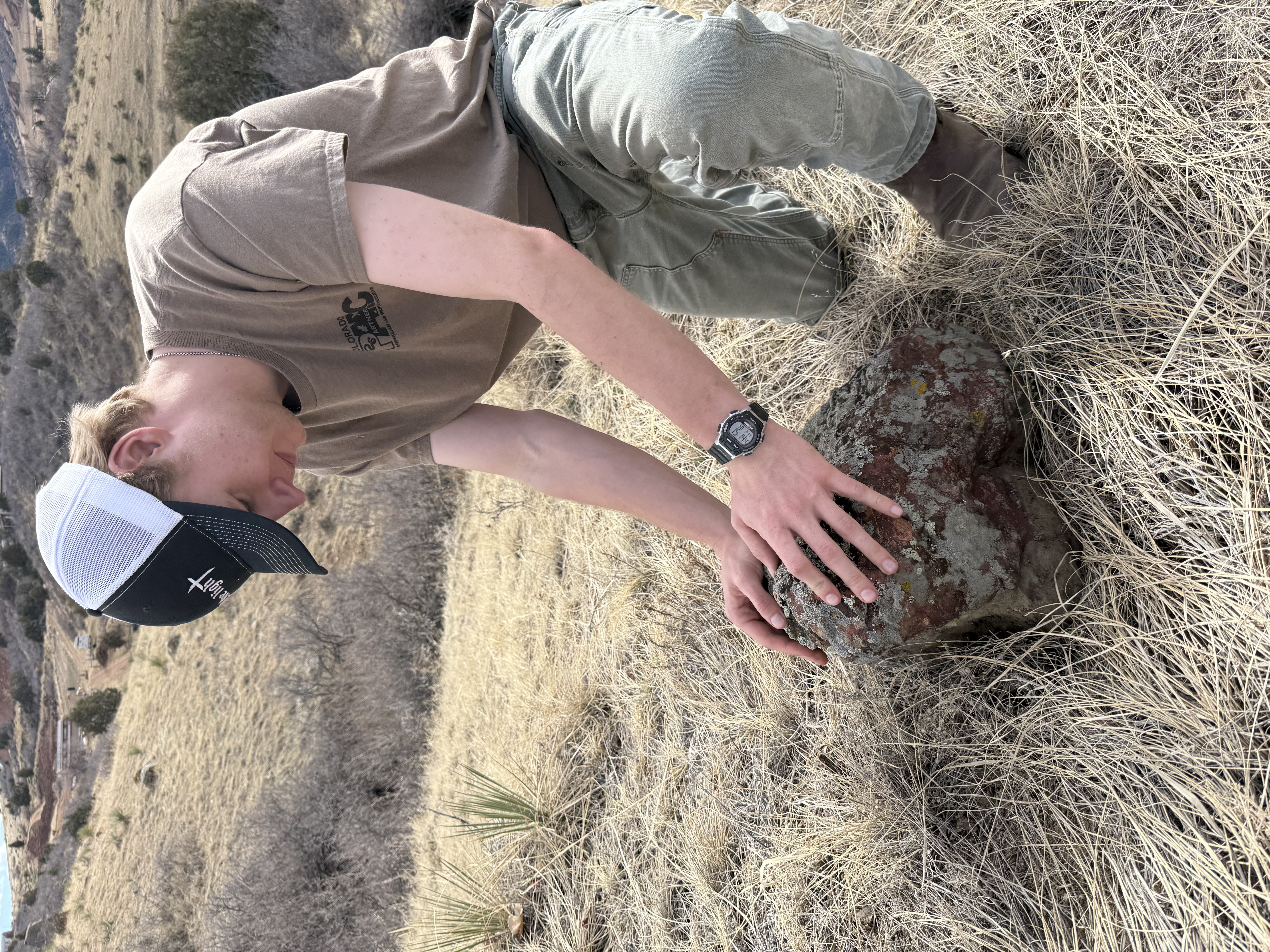
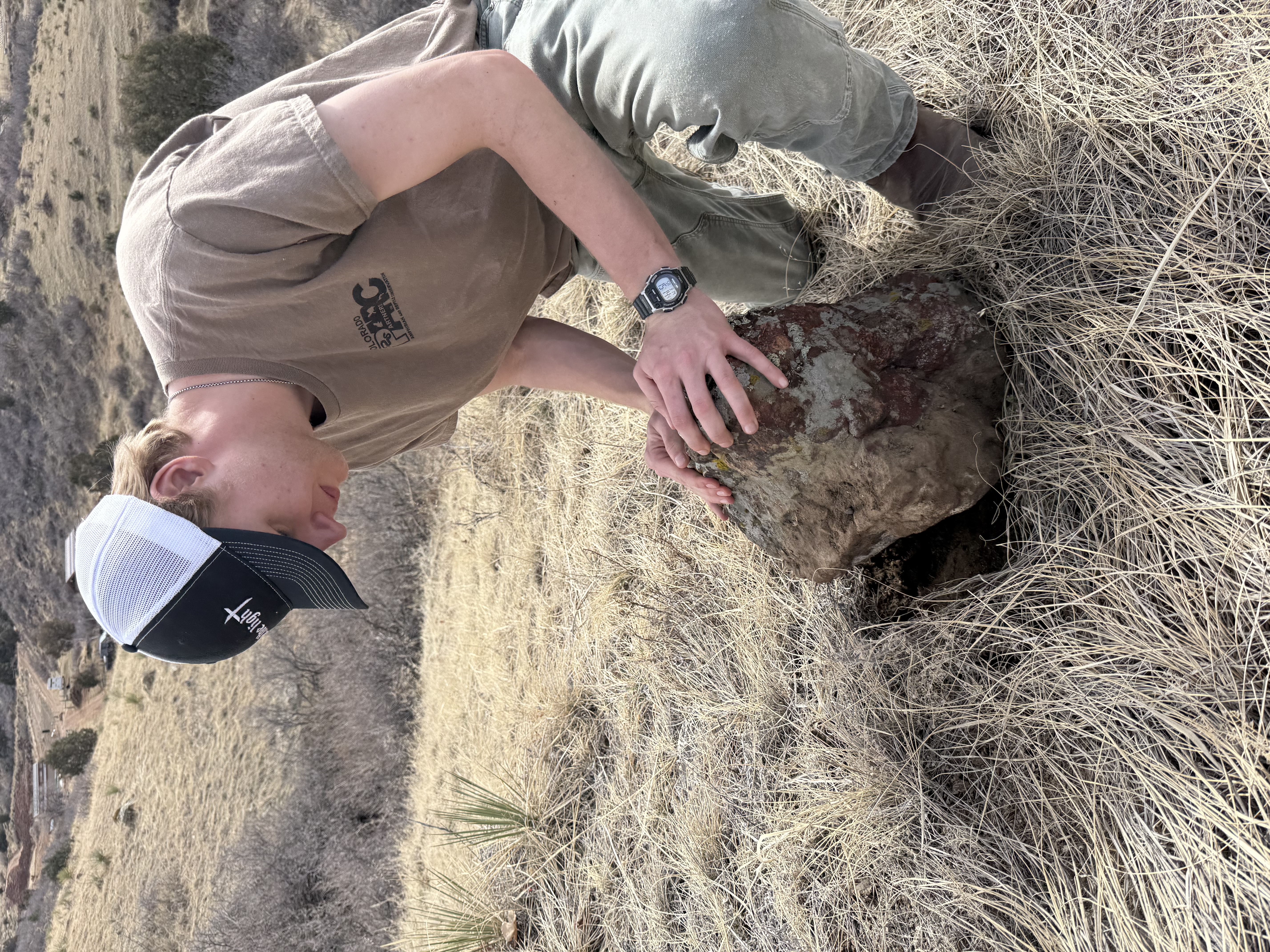
- Avoid disturbing animals in amplexus (while breeding).
- To avoid pinching the rib cage, grasp the animal around the midsection so that the tips of your fingers are touching or overlapping. See the photo to the right as an example.
- Avoid handling during cold temperatures.
- Aquatic morphs (larvae, fully aquatic adults) should be kept in water.
- Do not handle rattlesnakes.
- Wash your hands before and after handling reptiles or wear gloves.
- Move with slow but confident motions.
- Use a snake tong or hook to gently lift and move snakes.
- Use a lizard loop to secure the animal around the shoulders. Don't grab lizards by the tail, as it may detach.
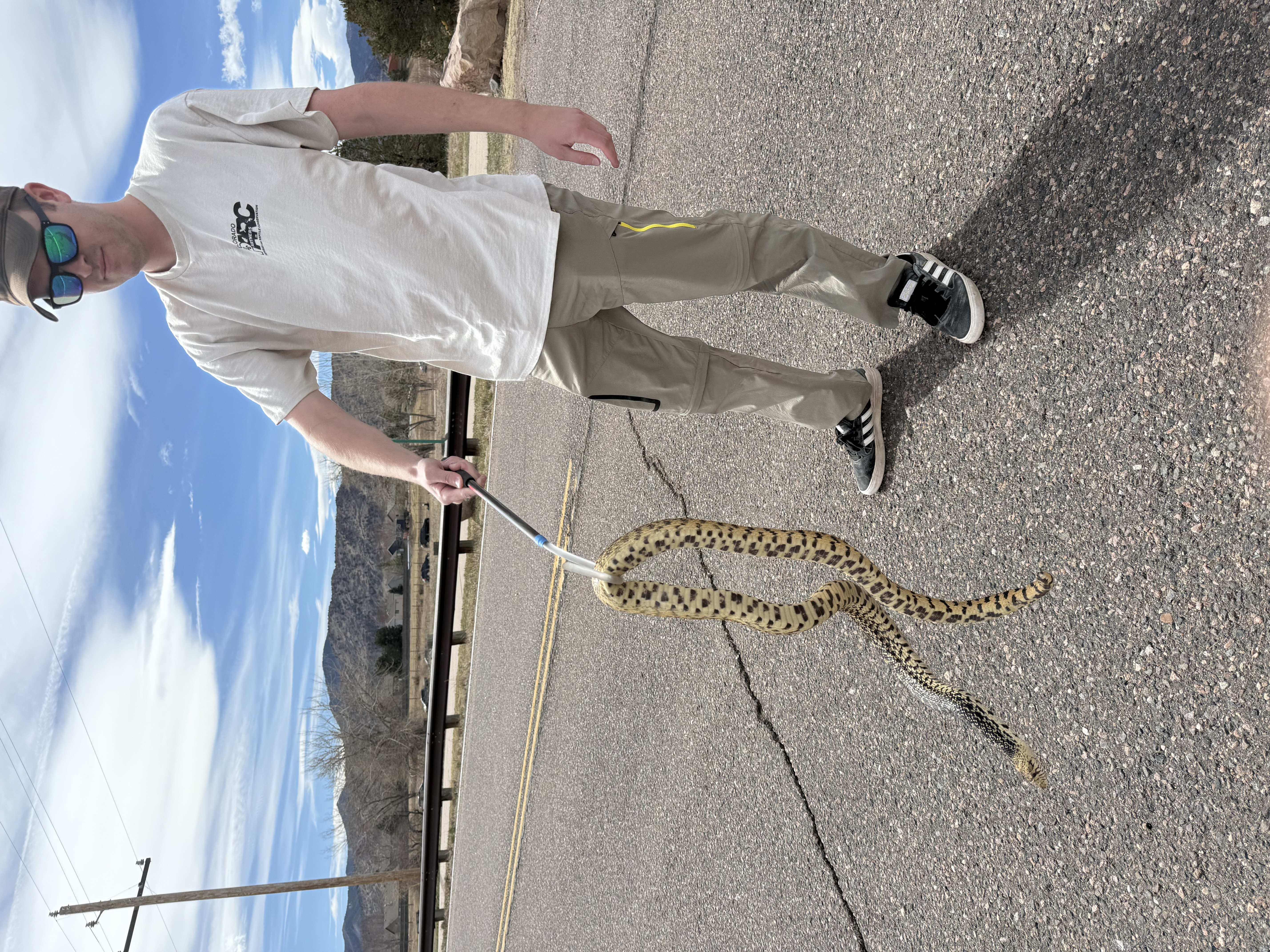

Collector disinfecting gear after handling herps
Disease Concerns
As global trade and interest in herps has grown, the risk of introducing and transmitting diseases has increased as well. Diseases can be introduced through the pet trade, when animals in captivity are released into the wild, or when animals in the wild are handled or moved.
People inadvertently facilitate spread of bacterial, viral, fungal and parasitic pathogens to herps. Just a few examples include:
- Batrachochytrium dendrobatidis: This fungus causes chytridiomycosis, a fungal disease responsible for world-wide decline in amphibian populations.
- Ranavirus: Some strains may cause upwards of 90% mortality across all life stages (from tadpole to adult in frogs, for example). Ranavirus can affect amphibians and reptiles.
- Snake Fungal Disease (SFD): This condition causes scabs, crusty scales, skin lesions, abnormal skin shedding and death in snakes.
- Chelonid herpesvirus: This virus can cause severe, fatal disease outbreaks in tortoises and turtles.
Learn the basics and importance of cleaning and disinfection for herps.
Help Prevent Disease
After handling herps:
- Clean all your gear before entering a site and before moving to a new one. Use water to remove mud and vegetation fragments.
- Soak or spray with 3% bleach or 1% Virkon solution for at least five minutes. (2-gallon HDX sprayers work well.)
- Rinse detergents off items well.
Everything that comes in contact with herps or the water needs to be clean!
Report Disease Outbreaks
If you find evidence of disease in a herp population, you can contact the following resources.

PARC's Herp Disease Alert System
The wildlife disease experts with the Herp Disease Alert System and U.S. Geological Survey work with state and federal natural resources agencies to investigate concerns or observations.
Make a report
Colorado Parks and Wildlife
If you observe a large die-off of amphibians or reptiles, contact Colorado Parks and Wildlife at: 303-297-1192 Or [email protected]

Get Involved
Share records on iNaturalist to help us learn! Researchers, herpetologists, and naturalists outside of CPW are encouraged to use this project to submit data to CPW for inclusion into the Reptile and Amphibian database, once the data has been verified.

Importing Wildlife
Bringing Wildlife into Colorado?
Despite other states allowing various species of wildlife for private possession, Colorado does not allow private possession of exotic animals/wildlife, unless specifically authorized by CPW regulation.
If any animal/wildlife is not specifically listed above as allowable without a license (Chapter W-11 either Dometic List or Unregulated Species list, or Chapter W-07 either Appendix A or Appendix B), that species is NOT allowed to be imported or possessed in Colorado.
Specifically, species such as raccoons, skunks, foxes, and monkeys are specially prohibited for possession in Colorado. Even if another state allows private possession (with or without a license) that possession is not allowed in Colorado. This includes interstate transport/travel.
Import of any aquatic wildlife species or raptor into Colorado requires a CPW Importation license – available online.